
Replaced Review
Played on XBOX Series X | Original Release Date 14 April 2026 | Review Date 25 May 2026
OVERVIEW
When I first saw a trailer for Replaced back in 2025, I knew it would be a day one purchase for my library. I instantly feel in love with the dystopian, cyberpunk, pixelated look the game was showcasing. I was convinced that the game would be amazing. So much so, that it was one of my top picks in my Fantasy Critic. But as the game marched closer to release, I began to hear rumblings that it wouldn’t live up to the hype. People who played the demo said they weren’t sure about it and the delay in releasing the game, gave me concern that maybe I backed the wrong horse. I avoided playing the demo, because I wanted to go in fresh with the release version and enjoy it without interruption.
So, on release day, I fired up my Xbox, paid the price of admission and download the game. I started with a healthy bit of excitement, the kind you get when you start a new game, and a healthy dose of expectation management, the kind you get because you’ve been burned in the past. Fourteen hours later - how am I feeling about Replaced? I’m still processing feelings and my thoughts on the experience - which are conflicted.
STORY
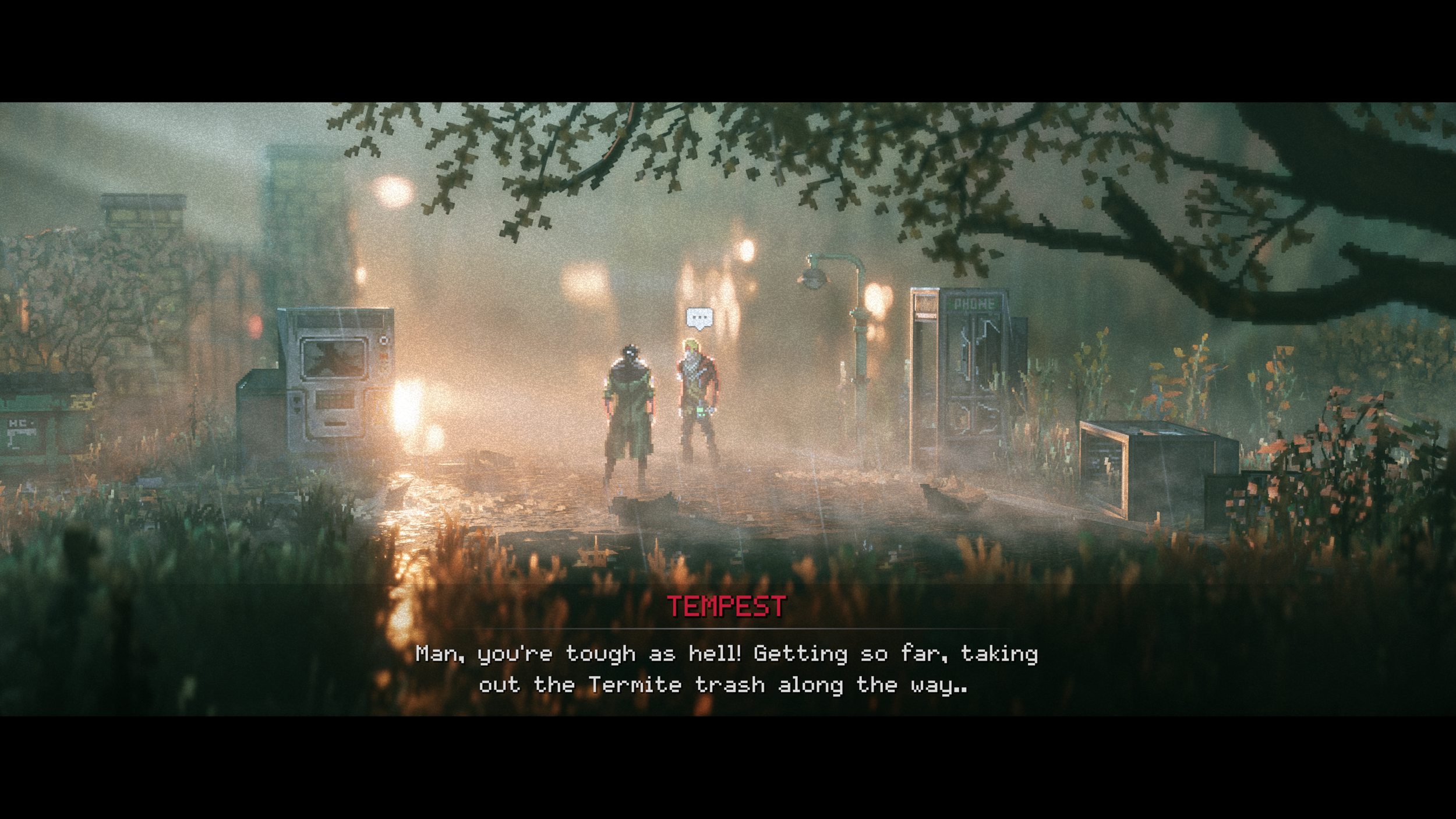
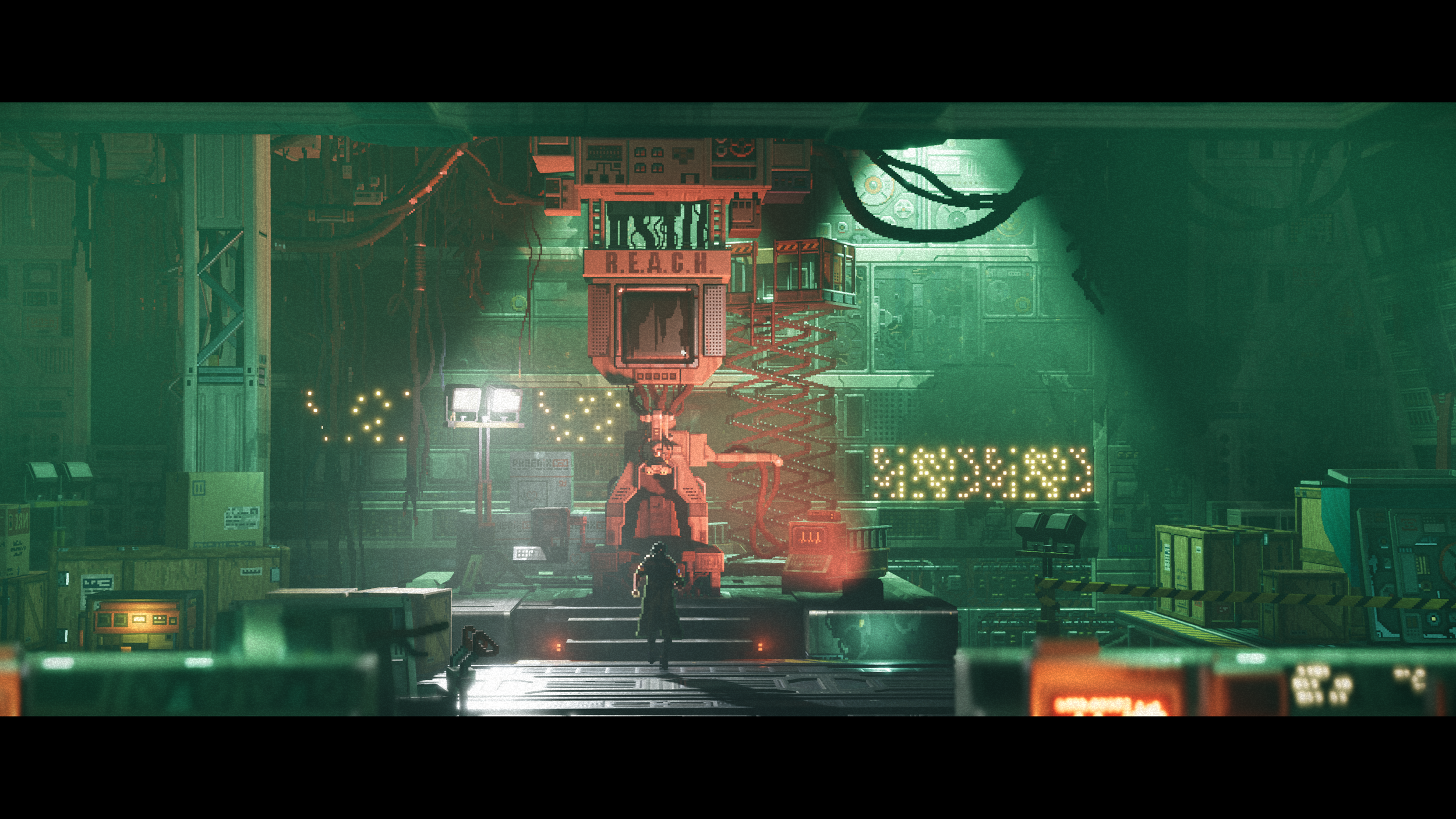
The story takes place in an alternate timeline, set in the US, in the 1980s where the events of World War Two, played out in a much different way and the world has been destroyed by nuclear fallout. The game is set in Phoenix City, a walled off city of corruption, run by Phoenix Corporation. One of the most aggressive forms of oppression is from harvesting and selling of organs from the oppressed, so the rich and powerful can survive. Helping the Phoenix Corp with their organ harvesting efforts is an AI programme called R.E.A.C.H. aka Research Engine for Altering and Composing Humans - sounds friendly. A programme created by Dr. Warren Marsh, a scientist and resident of the city. Dr. Marsh is our main character, but at the very beginning of the game his body is taken over by the ever evolving, and now sentient AI R.E.A.C.H programme. The incident triggers the cities computer mainframe to react and suddenly a the newly created humanoid version of Reach is forced to escape the walled city or risk being captured by the government and deleted.
This starts a journey of discover for both the player and Reach. As the player we learn more about the events that took place back in the 1950s and 60s which led to nuclear war. As Reach we learn that the algorithm that he is based on is being used by the government for corruption, through old newspapers and items you discover. The characters you meet along the way give a glimpse into what it’s like to be human in this world, something Reach doesn’t understand and a theme he must explore throughout the game. Some characters are victims of body organ harvesting, people called ‘Disposals’. Other’s are fighting back against Phoenix Corp and will stop at nothing until they fall. While other characters have simply resigned to the fact that this is the world they live in and are finding ways to adapt and get on with life, or what’s left of it.
I’m being slightly vague in my references to the characters and what they get up to, because that’s a core part of the gameplay experience. There are a dozen or so key characters you interact with throughout the game, and each of them has purpose, fleshed out with a decent story arch and emotional depth. Their motivation, the choices they make, their viewpoints about the world and each other all feel genuine and deeply unique. Not every character is equally as strong, but each of them play their part of the whole to build tell a haunting and truly impactful story.
Based on the action packed marketing trailer, I had no idea that such a deep and visceral story was at the heart of it. And there in lies one of the issues I struggled with at first. I was expecting to go into a combat heavy, action, platformer, but this game is actually a story-first experience. For the first hour or so, I was disappointed with the gameplay. But after about the second hour, I realised its narrative driven and it peppers in platforming, puzzle-solving, and challenging combat that asks you to ponder and explore themes of corruption, survival, loss, power, life, death, and what it means to be human.
GAMEPLAY
Replaced is a mixed bag of gameplay experiences. There are sections of stealth where you have to hide from drones that will one-shot kill you. There are precision platforming moments where you have to land each jump or acrobatic move precisely within a challenging gauntlet of traps or you’ll die. There are side-quests that require you to beat the high score on an old arcade machine to gain someone’s friendship. There is also secrets to uncover about the world and it’s characters so you can 100% the game. And there are tonnes of combat sequences that test your ability to dodge, parry and attack swarms of enemies. And there is walking, a lot of walking. All of this take place on a 2D plane while you’re moving left to right.
The game is broken up into different chapters and areas. During most of the chapters you encounter a mix of the gameplay outlined above. So for example, early on in the game you are walking through a deserted town, that is just outside the Phoneix City walls. You will spend a good three minutes simply walking to the right. Literally. You’ll then encounter some basic puzzle platforming that has you move a crate to another position so you can reach a higher ledge to continue onwards. You’ll eventually come upon a group of bad guys, that you’re required to beat before you can progress. You’ll then have to sneak past drones that have been sent out to patrol the area you’re walking through, timing your movements to hide behind buildings or other objects to keep them from finding you. You’ll do some more platforming, but you’ll have to do it at a sprint, and if you miss time your jump you’ll be shot and killed. Eventually, you’ll make it to the final fight of the stage where you’ll fight a powerful boss, or large group of enemies, and finish the chapter and move on. Other chapters are simply there to push the story along. You’ll do a few side quests which provide you with more health or level up your gun. Or explore the environment looking for clues about the world and what’s happened to it. These are a nice change of pace and help break up the game and build out the world.
I outline the above because this formula happens over and over again. I found myself thinking, ‘oh we’re doing this bit, again’ when I came upon a yellow crate that I had to move to get to a higher ledge. However, the game ramps up the challenge and changes things up by introducing new skills that you’re required to master which add more depth and complexity. For example, with the combat, Reach finds a gun early in the game. The gun is biometrical and can only be fired by the person it’s assigned to, who is dead. Reach takes the gun and uses it to pistol-whip enemies during fights. Later on the in the game you’ll get the ability to actually fire the gun. However, you have to earn the right to fire the gun by dodging, parrying, and attacking at the right time. Do this correctly within a battle sequence and a gauge will slowly fill up and once it’s full you’ll be able to deliver a devastating blast that will take down an enemy.
In the platforming sections, you’ll discover updrafts that allow Reach to double jump. Or you’ll be required to use your pick axe to grip onto parts of a wall, then jump over an updraft to double jump to a bar and then swing over to another part of the wall where you’ll have to use your pick axe again and finally jump to bar where you’ll swing back and forth to reach the area you’re trying to get to.
All of these skills are introduced at a fairly good pace throughout the game. Once you’ve mastered a new skill, the game adds another one and expects you to be able to chain them together to overcome challenges. I died several times while learning new skills but they do eventually click and feel great when you learn to string them together. I’m not an expert gamer, but I’m pretty good at gaming. I died a lot in my playthrough, but you start right where you left off, so you can quickly back into things. However, sometimes I would die from being hit by the last baddie in a tough fight sequence, which meant I had to start the whole fight over again. But I didn’t mind with this game. I knew why I’d done poorly in this fight, and just focused a little harder on the next go and was typically able to make it through. So, yes, it can be tough, but I don’t feel like it’s punishing.
The is a slow-paced game. It’s not the action packed experience the trailer portrayed. Once I got my head around this, I started to enjoy the game on its terms. Reach doesn’t walk that fast. The platforming sections can be long and slow-going at times. The conversations you have with the other characters can go on for sometime. This is all balanced by twitchy-fast paced combat sections that require precision and timing, and can be really stressful. So the calmer pace outside those sequences are very welcome.
GRAPHICS
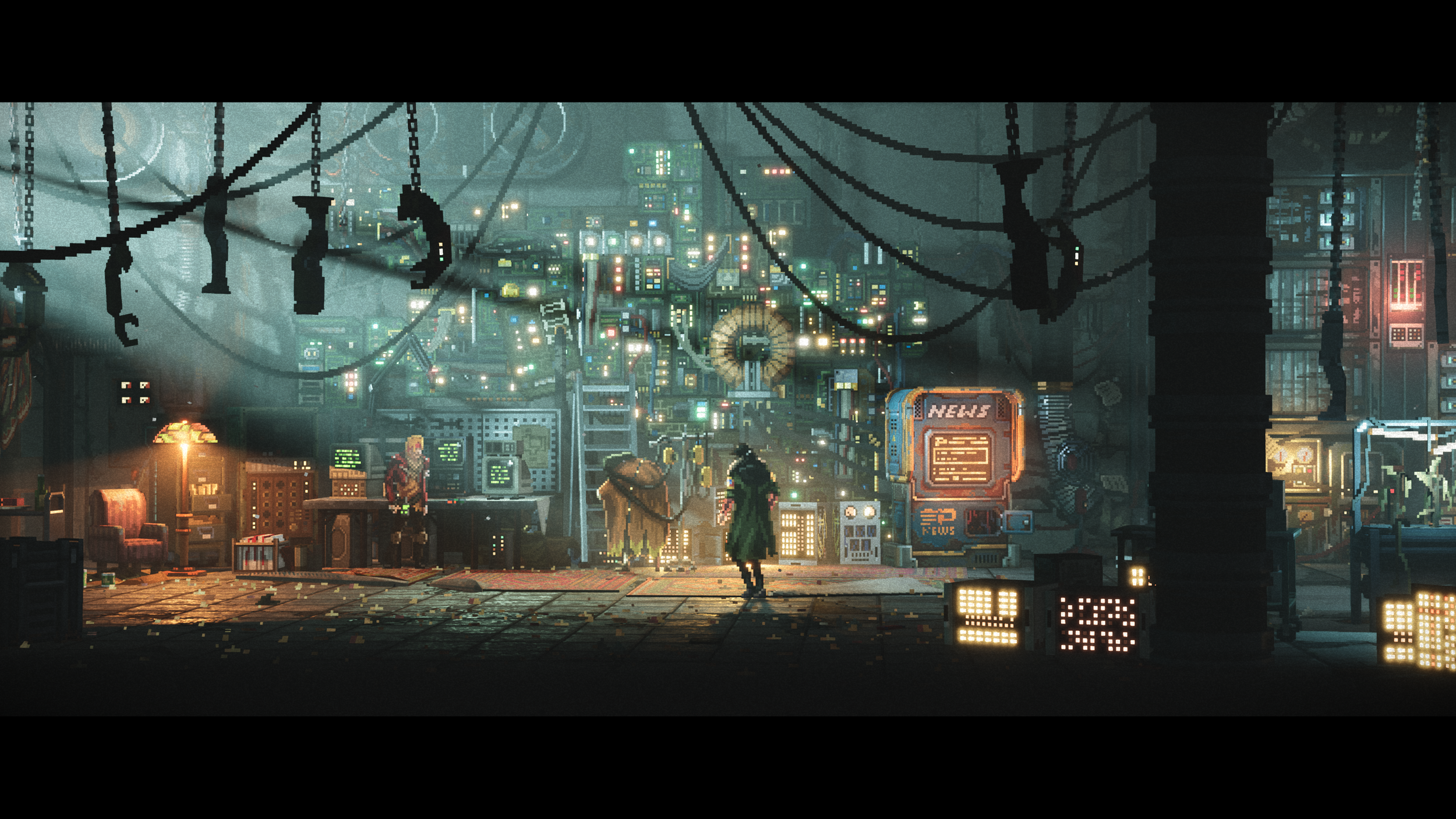
The trend of using pixelated retro graphics is starting to get played out in my opinion. Don’t get me wrong, I love a good throwback to 80’s and 90’s pixel art, but with the onset of 2DHD and other similar graphic styles, it’s starting to loose it’s edge. What the team at Sad Cat manage to create with Replaced isn’t ground breaking or new, but there is an artistic vision stunning. This is how you do retro-throwback pixel graphics. Every environment is so well designed and structured with such haunting beauty. Some aspects of the graphics are hyper detailed, while other parts really lean into restraint and a more representative of the object they are rather than a detailed model. I know they are using modern technology to achieve this style, but it doesn’t feel over engineered. The graphics seem like they are from a different time of gaming, but then they’ll do some trick with the camera or lighting and you know you’re dealing with modern art design.
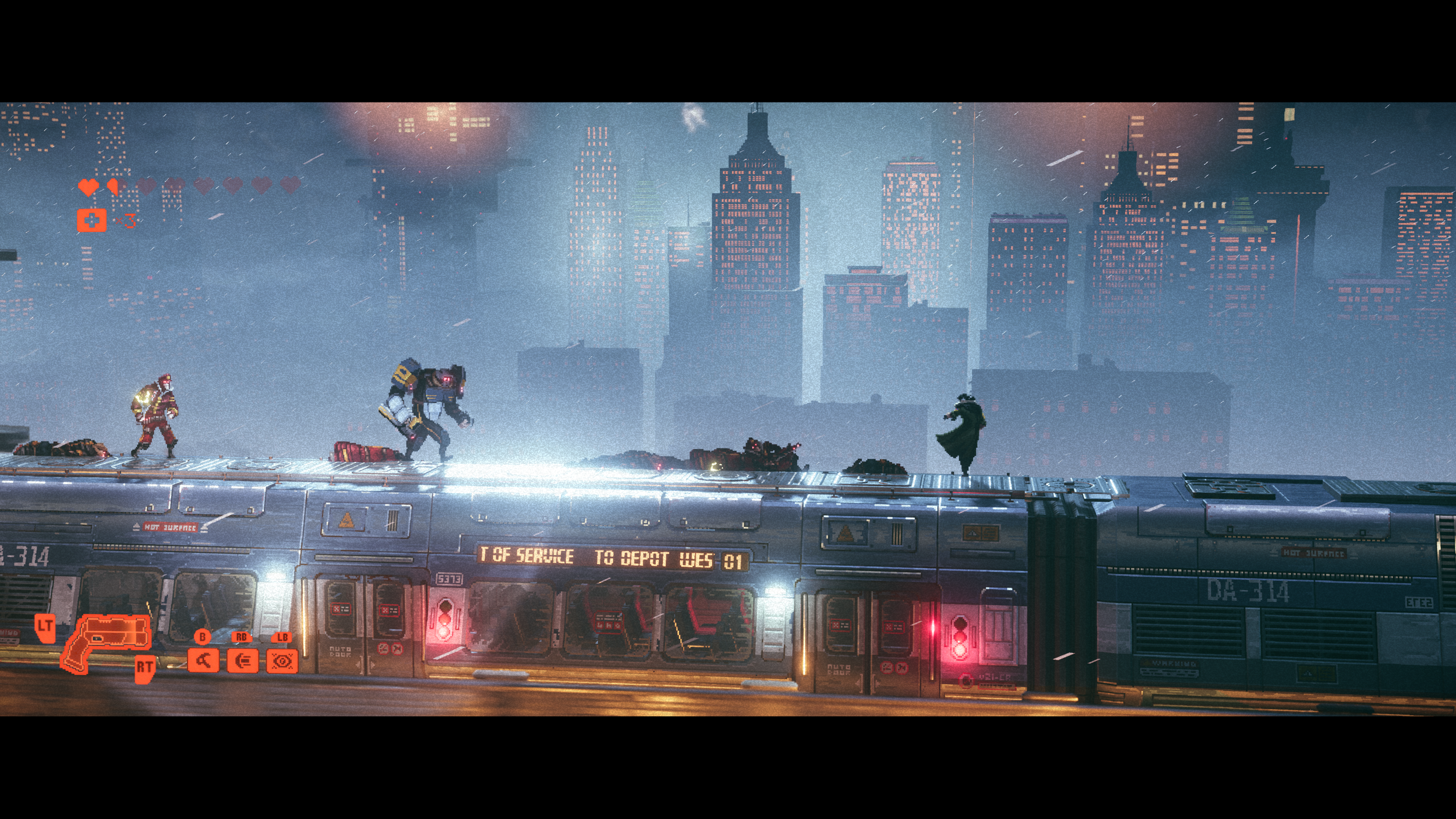
Each area of the game is a distinct set piece that not only looks amazing, but also visually informs the story and encourages you to want to explore. The developers and designers know they have something special for us to look at which is why the long sections of walking and platforming exsist, as well as the chapters where you simply need to explore the current environment and do side quests. As you walk through deserted towns, old railway stations, or through record stores you discover visual cues that have emotional impact and depth. I especially love the camera work through the game. There are great close ups, pans or zoom outs that emphasis the action, story beats or simply give you a better view of bad ass graphics. I mean, can we talk about the vehicles in this game - so freaking beautiful! This art style is inspired by the past, crafted meticulously with passion, and an example of how to bring history into modern gameplay. A few standout environments and moments include the computer wall in Yo-Yo’s workshop, the subway set piece where you’re fighting off hordes of enemies on the roof of a speeding train, and the arcade where you find a new best friend - all sublime.
MUSIC
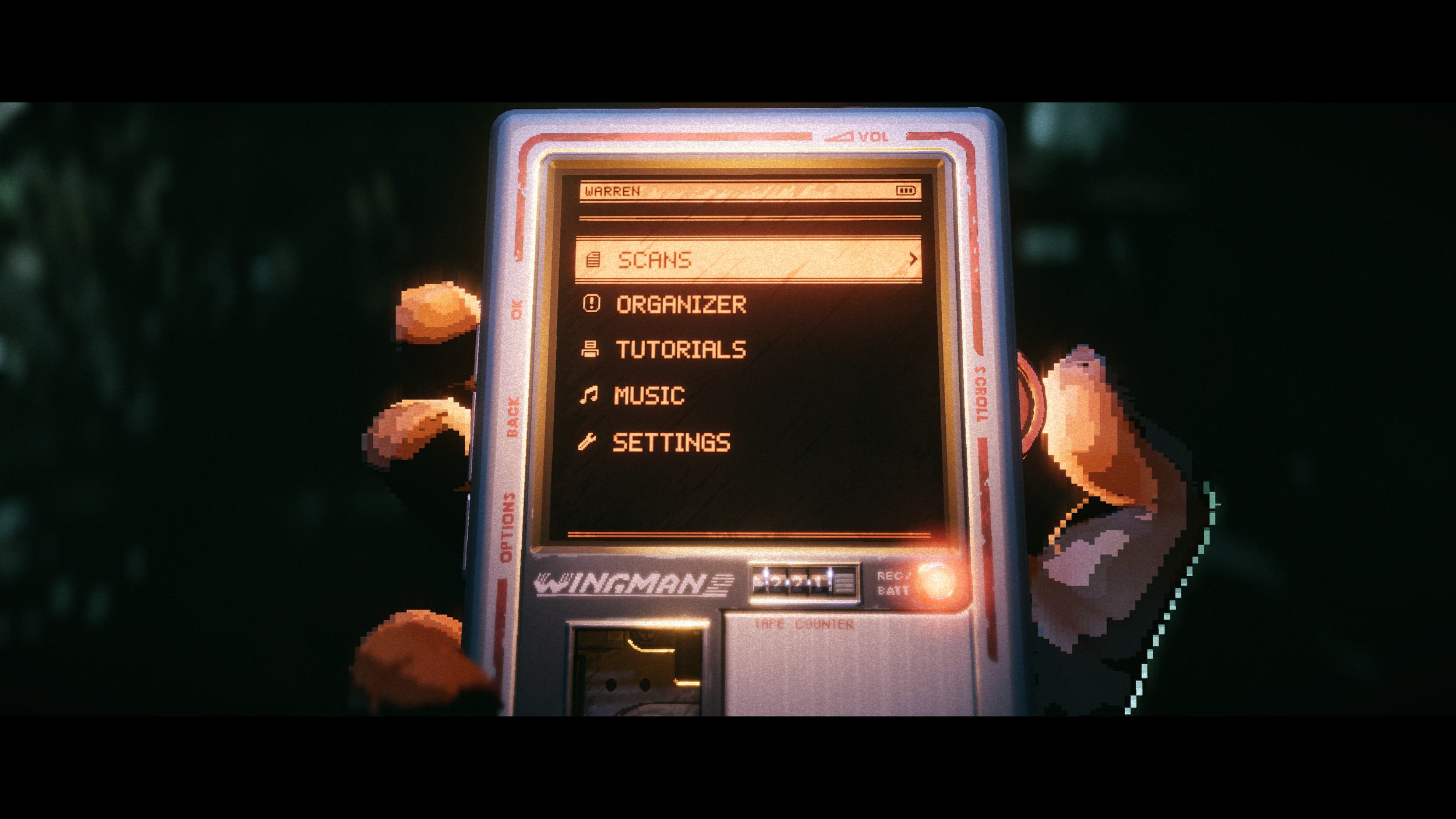
The story and world of the game are brought to life by the brilliant soundtrack, by Igor Gritsay. In fact, I would go as far as to say that the game wouldn’t be as good as it is without it. Where the story depicts an alternate reality the music is clearly familiar and influenced by 80’s music in this genre (in a positive way). This isn’t just regenerated, bland synth music. It drives emotion, story beats and action tied directly to what’s happening in the game. It even connects the soundtrack to Veronica’s story. Without getting into spoiler territory, Veronica is a musician who is a victim of the body harvesting elite. As you work your way through the game you discover music tracks that she wrote and you can use your Walkman-like device to listen to them. Building this element into the world and story felt great and got me excited to search every nook and cranny for all the music tracks hidden within the game. However, not all of these tracks are played, so make sure you take time to listen to them during your playthrough - it’s well worth it.
CONCLUDING THOUGHTS
Replaced is a game that succeeds because of the sum of its parts. I wouldn’t want to play the game for its platforming. If it was just a brawler, I’d find it too intense. As much as I enjoyed the character’s and stories there isn’t enough here for it to stand on its own. But the combination of all of these things, plus the themes, graphics and music, makes the overall experience a deeply engaging and emotional one that has stayed with me after 14 hours of gameplay.
I keep thinking about the themes the game asked me to consider. AI being used for tool to save people from dying. Groups of people oppressed by power hungry elites, working together to fight back. The lack of medical care available to those who need it. All of this is set in an alternative reality but I can’t help but think this game is ahead of its time in our current reality. A warning of what’s to come. I don’t want to be hyperbolic, but given the state of the world and technology, it’s not beyond the realms of possible.
This makes Replaced an easy recommendation. It’s not for everyone and it has its flaws. But in a world of gaming that feels familiar and oversaturated with mediocrity, Replaced manages to create a powerful experience that should put it in the game of the year category. Sadly, it will be a game that is loved by its fans, and not given attention by the wider gaming community. Hopefully, it can become a game that is looked back upon as an indie darling with emotional depth and insight - not just a game, but an experience that stays with those who sink into all it has offer.
OUT OF SYNC GAMING REVIEW SCORE | 9 out of 10
Did you play Replaced? Share your thoughts and comments below.
