
The Legend of Zelda Review
Played on Nintendo Switch 2 NSO | Original Release Date 21 February 1986 | Review Date 12 April 2026
OVERVIEW
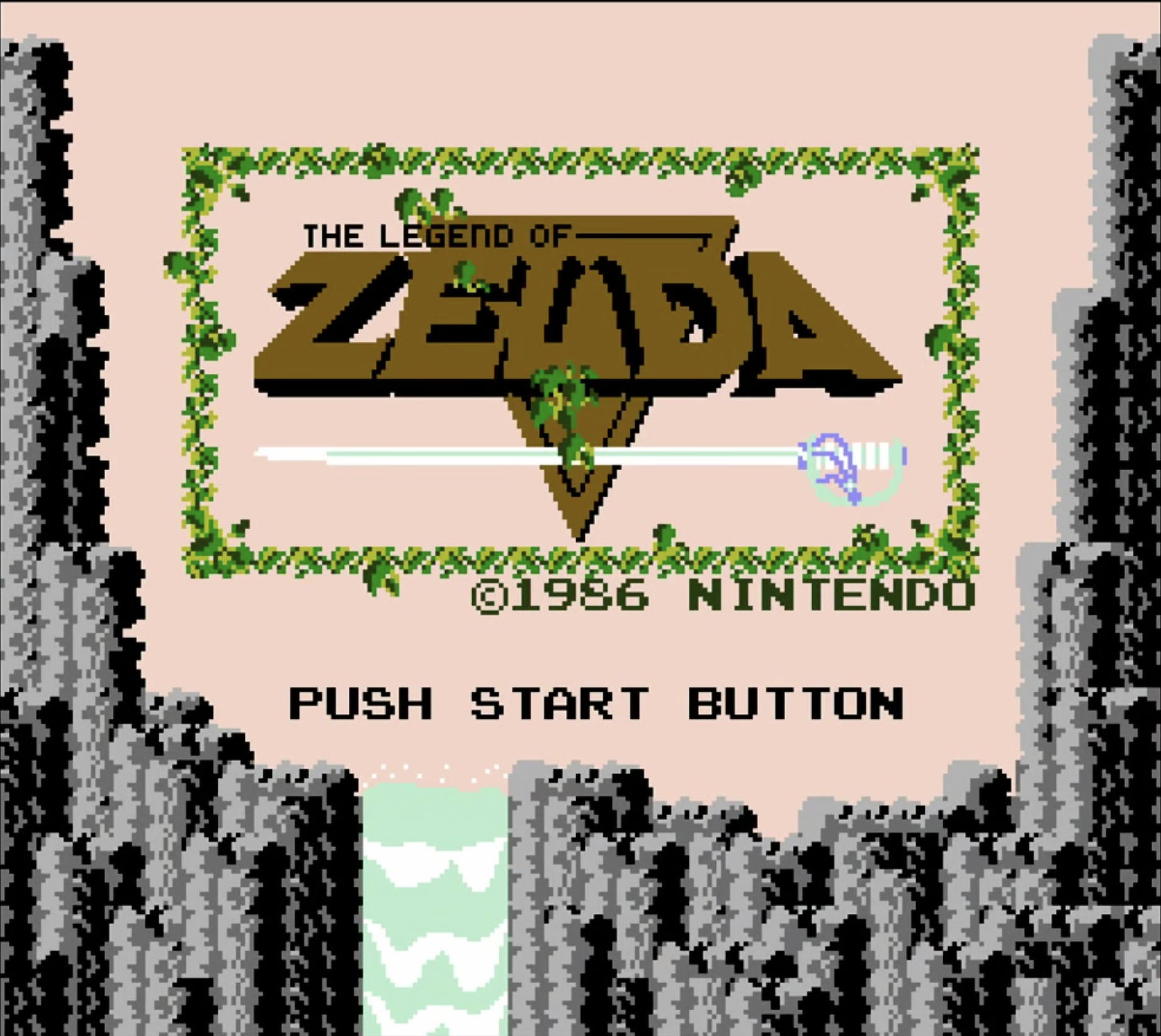
There are not very many games that have the honour of starting one of the most successful and loved franchises in the history of gaming. The Legend of Zelda earns its place on the Mt Rushmore of video games and is arguably one of the most influential games of all time. But 40 years later, at the time of writing this review, does the game still hold up or have we all been stunned by a rose tinted boomerang freezing us in a retro haze of nostalgia? Check out my review to find out.
STORY
Shigeru Miyamoto, the creator of The Legend of Zelda, famously told the world that he was inspired to create the game when he stumbled upon a cave while playing as kid. He tells the story of the fear and exhilaration he felt as he made his way into the cave with nothing but a lantern and a stick which unlocked his imagination. This experience would stay with him until he finally had the chance to creatively express it through the creation of The Legend of Zelda.
The story of Hyrule, the Triforce, and the impending end of the world is at the core of most of the mainline Zelda games and that’s no different with the game that started it all. For modern players who are picking up the game for the first time, you could be fooled into thinking there is no story whatsoever. There are only a handful of NPCs, and they don’t tell you anything about the world or story - they simply provide items to buy or cryptic messages to aid your on your journey. But do some digging around on the internet, or find an original copy of the game with the instruction manual, and you will discover a rich and expansive story set in the fantasy world of Hyrule.
The story goes a long time ago, during a reign of chaos, there was a little kingdom know as Hyrule. And in this land they told the story of the mystical triangles called the Triforce. The mystical triangles held great power and were sought after by evil beings so they can manipulate the power for evil purposes. Ganon, a very powerful and evil beast, invaded the land of Hyrule and was able to steal two pieces of the Triforce. Before he could find the third piece Princess Zelda of Hyrule, broke it into eight pieces and hid it throughout Hyrule, keeping Ganon from fully harnessing the power of the Triforce. This enraged Ganon and he capture Princess Zelda and held her prisoner while his minions and army scoured the land in search of the hidden pieces of power. But Princess Zelda would not be deterred in her fight to rid Hyrule of Ganon’s rule. She believed that there would be someone brave enough and honourable enough to wield the power of the remaining piece of the Triforce and rid the land of Ganon and his evil army. So, she sent Impa, her trusted servant, on a mission to find such a person. Impa travelled far and wide across Hyrule looking for a brave hero. Just when she was about to be caught by Ganon’s army, a young boy appeared and devastated the attackers, saving Impa and proving that he was the one to save Princess Zelda and Hyrule. This young boy became our hero of time - Link!
Link, armed with only a wooden sword his courage, sets off on grand adventure of danger and discovery to save the world of Hyrule from the evil grip of Ganon. Thus creating a story that has stood the test of time, or at least the last forty years, and continues to draw us back to the world of Hyrule over and over again. And all of this from a accidentally discovery of a small cave in Shigeru Miyamoto’s childhood and his belief that an epic adventure could be experienced on the 8-bit NES hardware.
GAMEPLAY
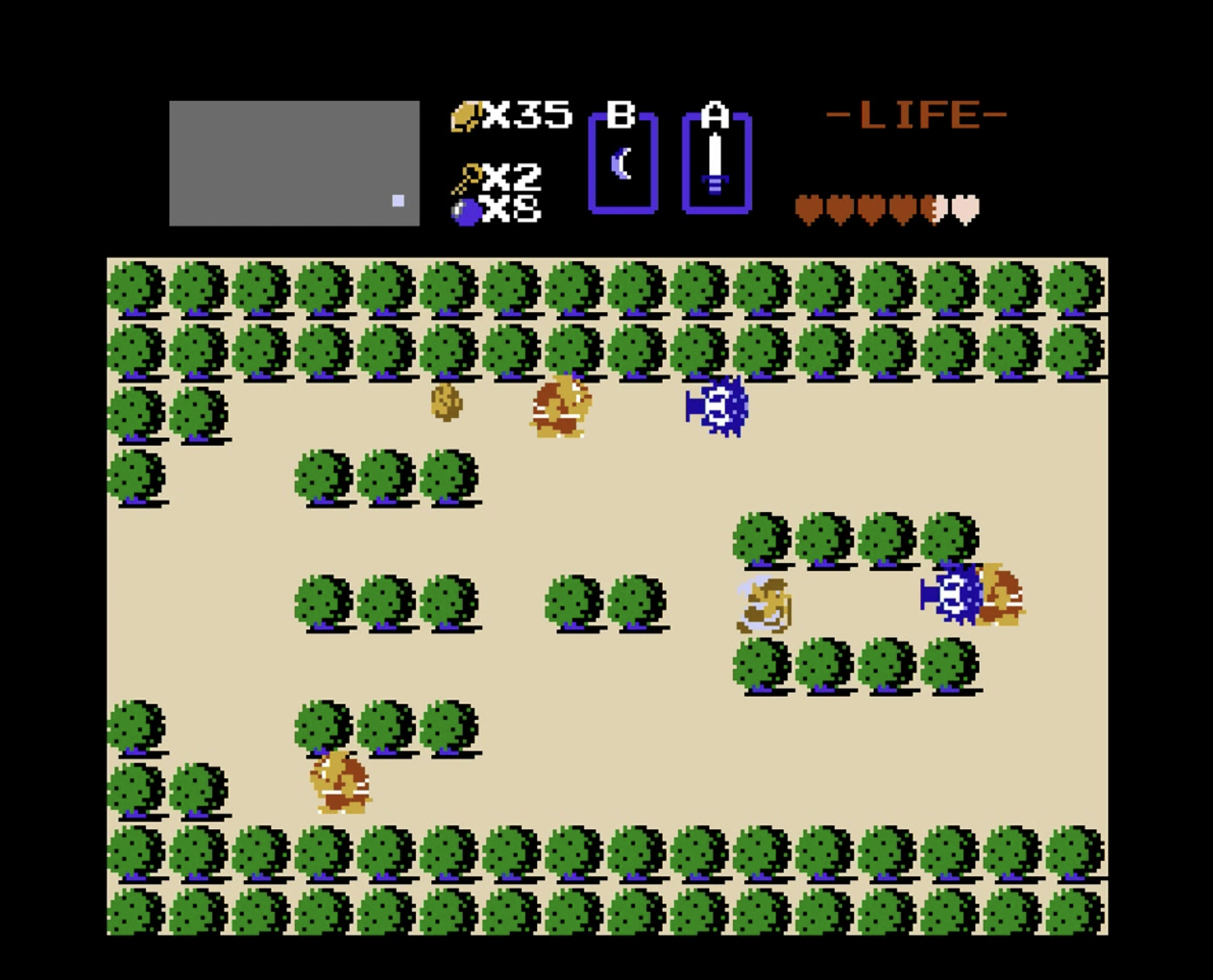
I’ve played through The Legend of Zelda so many times, too many to remember. But on this most recent play through, I couldn’t help but be in awe of how truly open world the game is. After a short story screen, you press start and the game simply begins with Link standing in the middle of the screen, seemingly in the middle of nowhere. You can set off in any direction your heart desires, exploring the over world of Hyrule screen by screen. The game doesn’t ‘tell’ you what to do, nor does it give you any sort of clue to figure things out. However, through clever design and visual nudges, you will discover things that help you along the way.
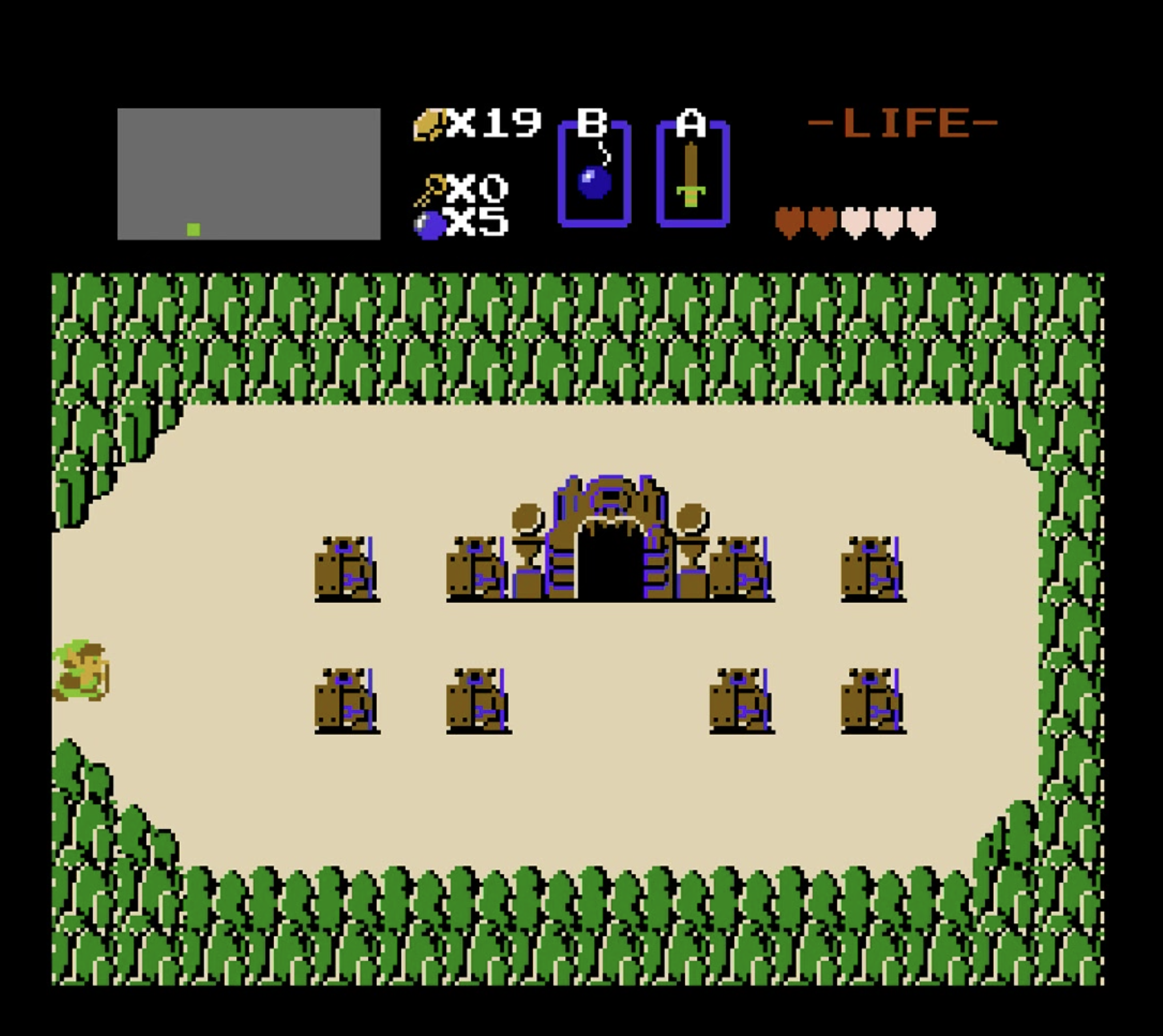
On the first screen there are four options for the player to choose. You can up, left or right to another screen. If you go down one of these paths first, you’ll quickly discover enemies are after you with no way to defend yourself. You’ll probably die, and the game will start you over back at the main screen. The fourth option is to enter into a black doorway, which takes you into a cave where an old man offers your a wooden sword. Grab the sword and suddenly you can defend yourself. Now you can start to explore further within the game, killing enemies along the way, opening up new pathways, secrets and places to explore, growing your power, wisdom and courage to progress.
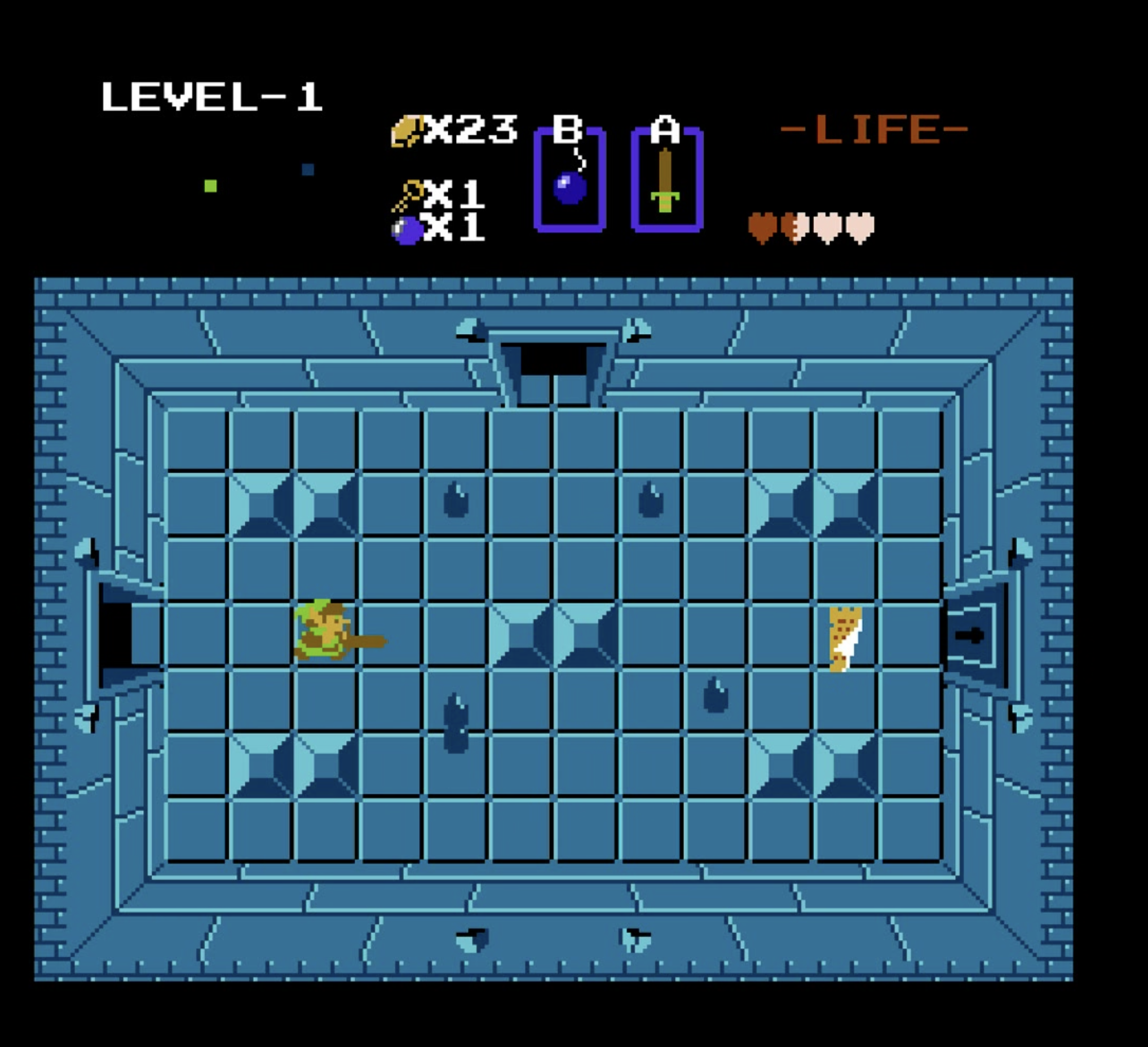
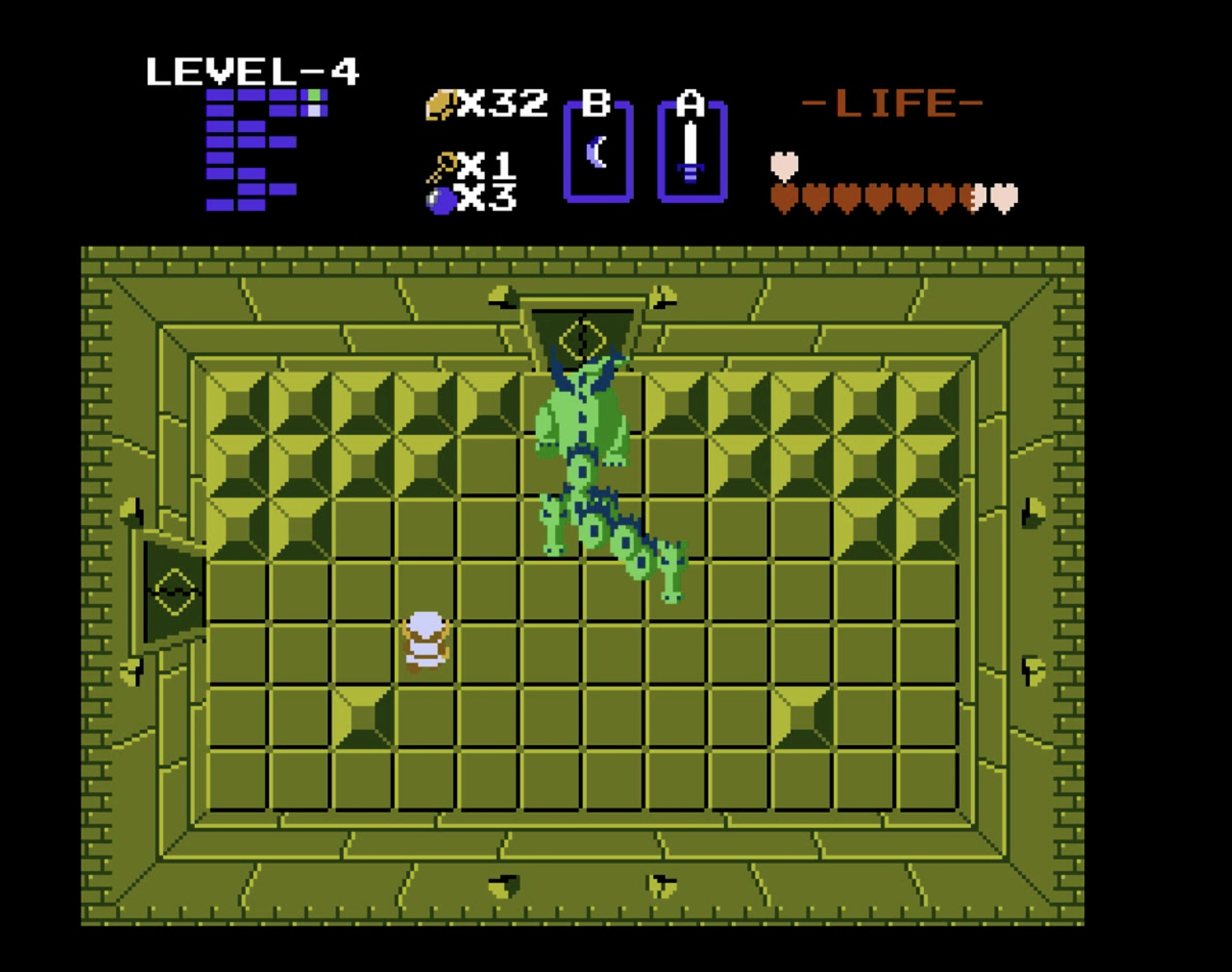
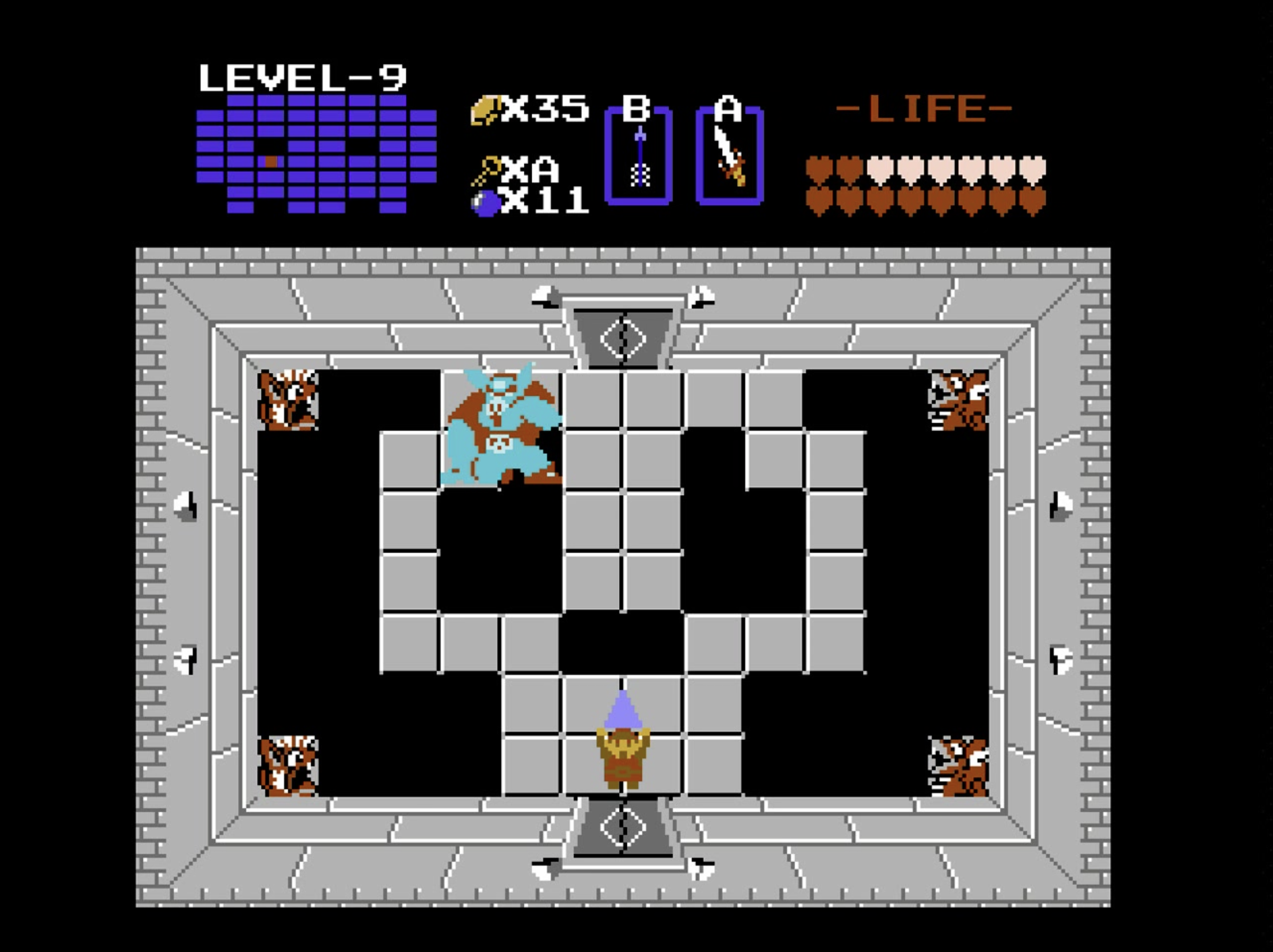
Along the way you’ll discover a variety of locations and enemies that make up the world of Hyrule. From the Lost Woods and the cemetery to the desert and waterways, you are tasked with traversing the map and warding off enemies in search of eight different dungeons that hold the eight pieces of the broken Triforce of Wisdom. Each dungeon has its own unique set of challenges, puzzles and enemies to navigate and is defended by a final boss standing in your way of the piece of the Triforce. Each dungeon also has a special item that you find to help you along the way. Series staples like the boomerang and the bow and arrow make their debuts in the game, while other items such as the ladder, seemingly only show up in this game and timeline of Hyrule. Discover a dungeon, find the special item (which isn’t required to do so in this game), defeat the boss, get a heart piece (or not), grab the piece of the Triforce and move onto the next dungeon. Do this until the final dungeon, defeat Ganon, and save Princess Zelda.
It’s a familiar formula, established by the game, that will stick around with the franchise for the next thirty years or so - but I’m getting ahead of myself. The Legend of Zelda is an action adventure game, but for me, it’s more of a puzzle game. The fighting and combat isn’t that great. Link’s sword doesn’t have a lot of reach, and Link can’t manoeuvre all that dynamically when fighting. I often found his lack of movement to be frustrating and caused the game to be harder than it actually was. Because Link can only attack with a short reach, and in one direction at a time, I often found myself getting destroyed by certain enemies because they moved faster and there was more of them at one time. It often felt like a cheap death, not because I couldn’t handle the combat, but because the balance of the action part of this game just didn’t work at points for me.
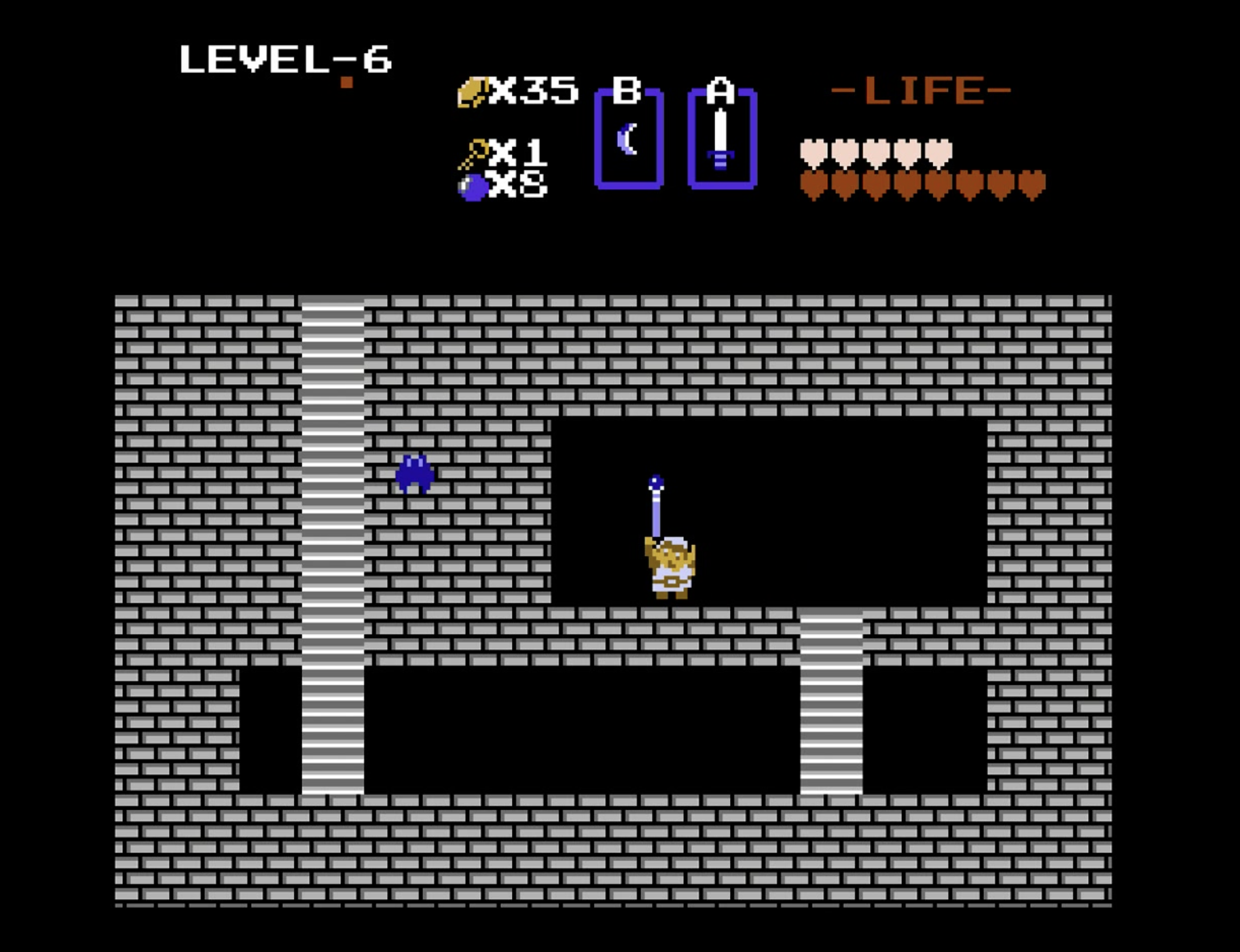
However the puzzles within the game are where the real challenge and fun are to be had. The maze like structure of the over world and the dungeons provide some head scratching moments while you try to figure out how to get from point A to point B. Like any good Zelda game you will come across an area that you can see, but you can’t reach. For example there is a heart piece in the water that you can’t reach until you have the ladder. (Sidebar, why the ladder is used to traverse the water and the raft isn’t in this instance will never be clear to me.) Or while in a dungeon, you might find yourself in a room with seemingly no exit, but a well placed bomb will open up the wall and voila, you’re on your way. It’s this sense of discovery and accomplishment that are at the heart of what makes Zelda games so fun to play.
However, there are a lot of unclear and poor design choices in the game that can be confusing and downright impossible to solve if you don’t know or have a guide. The aforementioned wall that you bomb - there are no cracks to indicate that you should bomb the wall. You simply need to just know that you can, or accidentally discover that you can. The same goes for the section of the map in the Lost Woods. If you don’t know the sequential order you need to go within the Lost Woods, you’ll simply go in a seemingly endless loop. You could even make your way through the game without ever picking up the sword at the start of the game. Granted the game is the first in the series and it’s from a time when this type of gameplay was the standard across games. In fact, Miyamoto once said in an interview that he wanted the game to be obtuse because he wanted people to share their discoveries and gameplay experiences with each other at work or on the playground so they can help each other figure it out. This works for a game like Breath of the Wild or Tears of the Kingdom, because there are tools and systems to give the player clues, but for The Legend of Zelda it’s simply just poor game design choices in my opinion. Unless you’ve played the game enough to memorise where all the secrets are or how to traverse the map, you can’t play this game without a guide. Well, you could, but I wouldn’t recommend it.
But the fact that there are so many different ways to approach this game and it allows you the freedom to go where you want, whenever you want (to a point) on the NES is still mind blowing. Nowadays this isn’t anything new in gaming, but when this game came out that was a big deal and was part of the draw to play the game, and I believe made the game standout as something different and exciting, and is one of the main reasons we’re still talking about this series today.
GRAPHICS
There are some iconic sprites in this game which still hold up today. I don’t think there was anything that was pushing the system limits of the NES, but the graphics are clean, crisp and clearly identifiable. The simplicity serves the game well, as it allows the player to fill out the world with their own imagination. At the time of it’s release, the instruction manual had a lot of artwork and story included so we were able to paint a more expansive vision of the game in our minds eye. But playing the game now, it’s fun to go back and see the first version of many of the enemies that have become familiar. I’m a fan of chunky 8-bit Link and I love that he’s been immortalised in amiibo form for me to proudly display on my shelf.
MUSIC
The fact that composer Koji Kondo came up with the iconic theme music for The Legend of Zelda in one evening is quite frankly mind-blowing. The plan was to use the music from Bolero, but due to copyright issues, Koji had to scramble at the last minute to compose and create the music for the game in one day, and thus one of the most recognisable theme tunes in video games was born. The overworld music succeeds in helping to create the vast world Hyrule. It has a sense of grandeur and adventure at it’s heart, that inspires and encourages the player to keep exploring and conquering. Which is great because it get’s looped over, and over, and over, and over again. For me it doesn’t get too repetitive, but I suspect for some players it will get annoying and you might want to turn the volume down and listen to a podcast while playing. The dungeon music serves the game well, with it’s more mysterious and haunting melody, with the game’s final dungeon evolving the music into a more sinister tone as the backdrop for the final challenge. The music really sets the tone for this game and is a major standout as a key element of it’s success, not only in this game, but for many more games that follow in the series.
CONCLUDING THOUGHTS
Going back to NES games can be annoying. There are a lot of early game developer flaws within the system’s library as gaming was evolving. There weren’t a lot of established rules for what a game should be, which was an exciting time for gaming, but also one that meant there were a lot of poor game design choices. Luckily The Legend of Zelda doesn’t suffer from this, too much. It’s a game of it’s time, but it’s also a game ahead of it’s time. There are some flaws in that it can be unclear on what to do or where to go, and some of it’s secrets are just down right impossible to know unless you use a guide. But this is also a fun aspect of the game that draws the player in to uncover it’s mysteries and solve the puzzles littered around Hyrule. The game was designed to be played with a guide, because, well they had to due to system limitations of the NES. The game is much bigger in it’s vision and scope and could never have been fully realised on the NES hardware. And that’s a good thing. Because pushing boundaries beyond limits helped create one of the most iconic and long-standing franchises in gaming history. Coming back to it after not having played it over ten years, and after playing through the modern games in the series, I’m even more impressed by how well the game holds up and is still enjoyable to play to this day. If you haven’t played it, do yourself a favour and give it a try. Grab a guide, use save states and modern gaming features and explore the origins of Hyrule, the Hero of Time, and the legend of one of the best franchises in gaming.
OUT OF SYNC GAMING REVIEW SCORE | 8 out of 10
Did you play The Legend of Zelda? Share your thoughts and comments below.
